I have a tendency of hypercorrection with language. For example, "This is the sort of English up with which I will not put!" (no preposition at the end of a clause). Since English is not my native language, real examples are best illustrated in Chinese.
One example I can think of in English is the refusal of using redundant acronyms, such as "PIN number" and "ATM machine".
Showing posts with label English only. Show all posts
Showing posts with label English only. Show all posts
Thursday, August 16, 2007

Tuesday, July 10, 2007
A tale of souls and swords, and ridiculous breasts
...And it wouldn't be a Soul Calibur without some lass with crazy huge mammaries. Though in this installment, Namco has opted to give the already impressively big Ivy a next-gen boob boost. You can see the difference below. And what's with that costume, anyway? More...

Monday, February 26, 2007
Suggestions to the denomination lineup of the United States dollar
Currently the commonly used denominations of the United States dollar are 1¢, 5¢, 10¢, 25¢, $1, $5, $10, and $20. Other currencies may have other kinds of arrangement. One must wonder if there is a better lineup than this seemly arbitrary one. In this post, I present you my sincere suggestions as a 6.5 year long currency collector.
 What is the optimal smallest unit of cash transaction or accounting? Economic theory dictates that the smaller the smallest unit, the more it stimulates competition, which is a good thing. But this unit cannot go indefinitely small, as there are also cost associated with handling and counting these petty units. Such cost includes labor counting, wrapping, and distributing. There are good arguments and counterarguments at this Wikipedia article - Efforts to eliminate the penny in the United States, which I will summarize here
Some people are worried about the additional inflation this action may bring. However, if the merchants do not change prices during the switchover, the statistical experiments show that the impact is extremely low to customers. Wikipedia quotes study which concludes a 1/40 cent per transaction gain to the customers. Another similar study conducted for Canada shows that with 1 item the rounding produces less than 0.06 cent of impact per transaction in average, and even less with more items.
But ultimately, it comes down to the cost/benefit analysis, the benefit being the above mentioned better competition. As a common person, without the resources and manpower of the government, think tanks, or consulting firms, I can only resort to a comparative study and a historical study – look at what other people do, and what the Americans did. I will talk about the methodology and the result later on the next section.
 In modern societies, lower denominations are coins, higher denominations are banknotes. Why? A coin lasts for decades, while the life of a bill depends on its value. The lower the value, the faster it circulates, and the shorter the lifetime. The manufacturing cost of a coin is much higher than that of a bill. But in the long run, the cost of using a coin may be cheaper if the lifetime of the bill is less than a certain threshold. For this reason, there exists a mathematical optimal cut-off point between coins and bills. Is it now the time to replace $1 bill with $1 coin? In 2000, Bernard Unger of the Government Accounting Office reported to Congress that switching from a dollar bill to a dollar coin would save the federal government $522 million a year. In this post, I will resort to comparative study again.
25 "richest" countries/regions are selected. But there are two primary methods of calculating income: nominal GDP and GDP at purchasing power parity. The nominal value is just the sum of economic output as-is, and then converted by exchange rate. PPP adjusts price differences from one economy to another. In other words, it measures output relative to an imaginary index good. 25 richest from both lists are combined to make 27 countries/regions. The source is the IMF (nominal and PPP). Wikipedia has copies which are sorted (nominal and PPP). The smallest coin, the larges banknote, and the smallest banknote in each country/region are listed and converted into various meaningful values for comparison. Mainland China is also included in the list just for my own curiosity. However, only the original 27 countries/regions are used for ranking and average.
In this table, we will find that the smallest coin, the largest coin, and the smallest banknote in Norway are 50 øre (0.5 krone), 20 kroner, and 50 korner respectively. By a straight conversion to the U.S. currency, they are worth 8.13¢ (!), $3.25, and $8.13. By this comparison, penny being the lowest denomination in the U.S. ranks 24th among the 27; quarter being the largest denomination in the U.S. ranks 26th, and $1 ranks the 25th. This is simply not in sync with the economic status of the U.S.. It ranks the 3rd if using PPP and 8th if using nominal.
From now on, these three values will be written as a tuple, like (1¢, 25¢, $1).
If changing the value of the U.S. to (5¢, $1, $2), then the U.S. would rank (7th, 23rd, 22nd). There are still room to "improve" on the largest coin and the smallest bill. (5¢, $2, $5) means (7th, 16th, 17th). Remember, this comparative study is based on the assumption that most people are sane and do the right thing.
However, prices are different in each country/region. Prices in Norway are 49% higher than in the U.S.! so 50 øre in Norway cannot buy as much as 8.13¢ in the U.S., but only 5.44¢. This is where the ratio between nominal and PPP comes in. The current value (1¢, 25¢, $1) ranks (24th, 25th, 25th). Jumping to (5¢, $2, $5) means (8th, 17th, 18th).
The same process can be repeated for relative value to GDP per capita. I used the nominal value because it is the value measured in their respective currencies and prices. The result is similar.
Enough with the numbers, what does this mean? The U.S. dollar is in a low position relative to its economic rank. That means these three numbers have room to grow upward. I have to admit that raising the smallest unit from 1¢ to 5¢ is a big step, both from an absolute and a relative perspective. But the pressure of replacing the $1 bill with $1 coin is imminent. Heck, the results even show that it is about right to use a $2 coin. Canada issued CA$1 in 1987, CA$2 in 1996. Australia issued AU$1 in 1984, AU$2 in 1988. The U.K. issued £1 in 1983, £2 in 1997. It is already late to replace the $1 bill.
measuringworth.com is a good website for querying relative value using various metrics. GDP deflator usually gives the smallest ratio, while relative share of GDP gives the greatest. To make a convincing argument, I will use the GDP deflator to conservatively state the relative value in 2005 of some amount in the past. Let's see how much 25¢, 50¢, and $1 in the past would be worth in 2005.
So if people in 1900 didn't have problems spending what would be at least 20¢ in 2005 as the smallest unit, and people in 1950 didn't have problems spending what would be 6.8¢ in 2005 as the smallest unit, why should we have problems using nickels as the smallest unit? By the way, the half cent coin was rendered obsolete some time in the 19th century.
By the same token (no pun intended), $1 coin is more than appropriate. The value of the quarter had been more than a 2005 dollar up until early the 1970s. They didn't have problems, why should we?
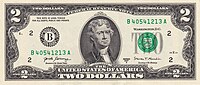 For every $2 bill/coin produced, two $1 bills/coins are saved. For this reason, the more denominations, the more cost saved. So why not $3, $6, $7? I believe that if a denomination is less than twice of the next lower one, the setup would be suboptimal. I wish I could prove this mathematically, but I have yet to come up with a proof. And because we live in a decimal world, $0.1, $1, $10, $100 ..., are a must. If we combine these two requirements, it would only leave three lineups: 1-2-4-10, 1-2-5-10, 1-2.5-5-10. A number four is hardly seen from physical currencies, anywhere in the world, although it did exist. So the first one is out of the question. The U.S. dollar is a funny thing. Sub dollar denominations are 1-2.5-5-10, denominations higher than a dollar are 1-2-5-10. Which one is better? We can study this through "average usage". Assuming 100 different sub-dollar amounts, from 0 to 99¢, have equal probability to occur at each cash transaction. For example, there is 1/5 probability to use zero, 1, 2, 3, or 4 pennies. Therefore, the expected usage is 2. (1¢, 5¢, 10¢, 25¢) => (2, 0.4, 0.8, 1.5), an average of 4.7 coins used for each transaction. The table below illustrates expected usage for any given lineup, expected total number of coins used for a transaction, expected total weight of coins under different weight assumptions.
In this table, the "current" weight assumption is the weights of the American coins, including the gigantic 50¢ coin. The weight of the quarter substitutes for an imaginary 20¢ coin. And I made up the 9.5-gram weight of an imaginary $2 coin. The "hypothetical" weight assumption changed the weight of the 50¢ coin to something more practical.
The current system results in 4.7 coins which weigh 17.3194 grams. If 50¢ coin is used, either 20¢ or 25¢ would result in 4.2 coins. So which one is better given this tie? 20¢ is better for two reasons:
Therefore, I conclude that the 1-2-5-10 setup is the best setup.
Following with the use of 20¢ and 50¢, eliminating the penny will reduce the expected number of coins to 2.2 with a weight of 13.61g! Even if $1 becomes a coin, the usage only increased to 2.6. The current size of the 50¢ coin is a legacy specification. If I change it to 7 gram, then the (5¢, 10¢, 20¢, 50¢, $1) setup would result in (2.6 coins, 14.68g), not a bad gain from the original (4.7 coins, 17.32g), eh?
A $2 coin will increase the expected number of coins and weight somewhat. If that is a concern, the use of a $2 coins can be deferred. However, $2 bill must be a substitute.
So if the advantage of a 50¢ is so obvious, why don't people use it? This Wikipedia article has a thorough explanation.
 The euro was designed when there was no euro. They must have designed it to avoid all kinds of silly things learned from the history, because it would be much harder to correct once the physical currency is in circulation. Euro is a 1-2-5-10 setup from 1 cent to €500, which confirms my previous claim. There are 8 euro coin denominations. 1, 2, 5 euro cent form a group, which is copper in color, smooth on the edge. 10, 20, 50 euro cent coins from a second group, which is gold in color, scalloped on the edge. 2 and 20 euro cent coins also have lightly different edges, to distinguish themselves from peers of their respective groups. €1 and €2 are bimetal, with fancier edges.
The sizes of the euro coins generally increase with value, which is only intuitive, unlike the American coins. The 5 euro cent coin is slightly larger than the 10 euro cent coin, the 50 euro cent coin is slightly larger than the €1 coin. This is done to enlarge the size difference within each "group" I defined earlier. This combination of color, edge, and size is a perfect design for common users, visually impaired people, completely blind, and tourists.
If the American currency was to be completely redesigned, what can be done, assuming a 5¢, 10¢, 20¢, 50¢, $1, $2 lineup?
It is only a legacy that the current nickel is bigger than the dime. When the U.S. was on the gold/silver standard, the quarter and the dime had to be a certain size, in silver with certain purity. So the size of the dime was defined like that and still remains the same until this day. Nickel, not made of silver, was not constrained by this. So they probably decided not to make the nickel even smaller than the dime, which would be ridiculously small. Now in the 21st century, it is only natural to make 5¢, which would be the smaller coin in my design, smaller than 10¢.
Copper color coins represent lower values in most places in the world, including the U.S. itself. The interior metal should be some cheap metal, like zinc ($1.64/lb) or aluminum ($1.31/lb). The edge of the 5¢ coin shall be smooth (cheapest to make), and the edge of the 10¢ coin shall be smooth with a grove to distinguish from the 5¢.
You might be wondering, why don't I choose silver color for mid tier coin, and gold color for high end coins because people usually think of gold being worth more than silver. Unfortunately, silver color coins are usually made of cupronickel. 25% of nickel is typical. And nickel is the most expensive metal among the common ones to make coins. Nickel costs $19.92/lb, while copper costs $2.81/lb. Choices of gold color metal includes aluminum bronze, which is typically 92% copper, 6% aluminum, and 2% nickel, or Nordic gold, the composition of 10, 20, 50 euro cent that is 89% copper, 5% aluminum, 5% zinc, and 1% tin.
The edge shall be scalloped and Spanish flower
They shall be made with a silver color metal, like cupronickel, or bimetal. One of the coins shall have intermittent scalloped and smooth edge; the other coin shall have inscription on the edge.
Come on! It is absurd not to have any Arabic numeral on coins. By the way, do you know that the presidential $1 coin is the first coin to have Arabic numeral in modern time?
The designs of the Federal Reserve notes have not changed much since 1928. It was until the late 1990s and early 2000s when they upgraded $5 and above to "large portrait", and then added colors. If all other countries were doing things much earlier than the U.S. did, then there has to be something wrong with the USD. It's not rocket science!
 The background color has been solid white for decades, or very light khaki. Color background was only added to $20 bill in 2003. If you take a new $10, $20 or $50 and inspect the background closely, you will find that it is not solid color, but fine lines. This is a hard thing to replicate, as most printing machines are only capable of printing small dots of different color, in a manner similar to a computer screen. Just look closely at a photo in a magazine. I welcome this change. But at the same time I am disappointed. This technology was available in the early 20th century, at the latest.
Not only the background must be printed with thin lines, the paper itself must be made with color. Color should be added as early as the stage when the material is in liquid state, a different color for each denomination. If counterfeiters overcome the difficulty of printing, they can get $1 bills, bleach them, and print $100 on them. Fully utilizing color prevents them from doing so.
It is unfortunate that only background colors are added to the new "color" bills. Foreground objects on the back side are still green; and foreground objects on the front size are still black. Changing the foreground color so that it is different for each denomination helps the visually impaired.
If the bills increase in size with their values, it helps the completely blind, and gives an extra clue to machine readers. It also helps preventing the "bleaching" counterfeit described above.
 Banknote security features are something the more the merrier. Hologram is simply a nice thing to have. All denominations of the euro, the pound sterling, the Bulgarian lev, and the Canadian dollar have holograms.
Some people are reluctant to see the current setup changed because they fear that the long-lasting symbols will disappear. I beg to differ. True symbols always live on, in one form or another. The French franc was once an important currency in Europe. It was the basis of the Latin Monetary Union. The 1 French franc coin has featured "the sower" since 1898, interrupted briefly in the 20th century. When inflation took its toll, and France had to introduce "new franc" as 100 old francs, the sower was still on the 1 franc coin. It's not just that, the design was identical, except metal composition and size. Even when the euro replaces the franc, the sower is still on French euro coins. If they don't want to see Washington and the Great Seal go, I totally understand that. This problem can simply be resolve by placing them on the $1 coin.
Humans are creatures of comfort. We all like to use the things we're familiar with. The lack of change in the American currency may be attributed to political and financial stability. But people's unwillingness to change for the better (like the metric system) is another big factor. Economic theory says that inflation is inevitable, and a small amount is healthy to the economy. If the change doesn't happen now, it will happen sooner or later. We must look forward, not back.
Rounding is easy, with computerized registers. Doing it manually is also trivial. Like the two Eurozone countries that uses 5 cent as the smallest cash unit, Finland and the Netherland, items can be priced to cent. If paid with non-cash methods, such as credit card or check, they are paid to the precise cent. Only when cash is used, prices are rounded to the nearest 5 cents. And rounding occurs after the total is taken.
It is easy. As long as they stop printing the $1 bill, people will be aware, and the $1 coin will be distributed. Failure of doing so only shows one thing: lack of will. To start, they can give change only in $1 coins in post offices and federal establishments that deal cash with the public. And the federal government can "ask" state governments to do the same, such as DMV's. They can hang posters in the post offices, a very cheap way to increase awareness. Plus, if they are truly determined to carry the plan out, news reporters will report.
Many vending machines are already capable of accepting the $1 coin. In fact, companies that make these machines prefer eliminating the $1 bill, to save maintenance cost on bill validators. Parking meters in my city accept the $1 coin too!
This post is also linked from
What material for debased nickels?
Where have all our pennies gone?
What is happeneing to our pennies?
Thegm @ StumbleUpon
Eliminate the penny
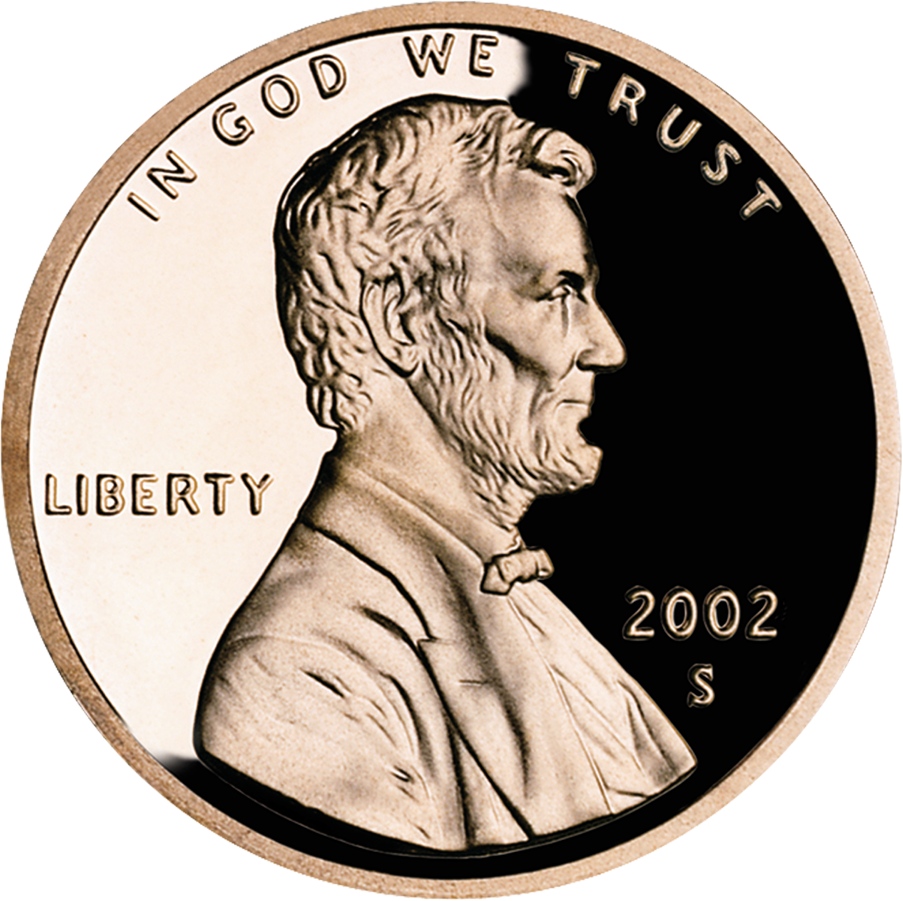 What is the optimal smallest unit of cash transaction or accounting? Economic theory dictates that the smaller the smallest unit, the more it stimulates competition, which is a good thing. But this unit cannot go indefinitely small, as there are also cost associated with handling and counting these petty units. Such cost includes labor counting, wrapping, and distributing. There are good arguments and counterarguments at this Wikipedia article - Efforts to eliminate the penny in the United States, which I will summarize here
- cost of production
It costs more than the face value now. Prices of all metal have been increasing at an alarming pace in the past 5 years. See here. - Distribution costs
It costs 3¢ per penny. - Lost productivity and opportunity cost of use
With the average wage, it takes 2 seconds to earn 1¢. - Limited utility
Many vending machines and bus fare machines do not accept pennies.
Some people are worried about the additional inflation this action may bring. However, if the merchants do not change prices during the switchover, the statistical experiments show that the impact is extremely low to customers. Wikipedia quotes study which concludes a 1/40 cent per transaction gain to the customers. Another similar study conducted for Canada shows that with 1 item the rounding produces less than 0.06 cent of impact per transaction in average, and even less with more items.
But ultimately, it comes down to the cost/benefit analysis, the benefit being the above mentioned better competition. As a common person, without the resources and manpower of the government, think tanks, or consulting firms, I can only resort to a comparative study and a historical study – look at what other people do, and what the Americans did. I will talk about the methodology and the result later on the next section.
Replace $1 bill with $1 coin
 In modern societies, lower denominations are coins, higher denominations are banknotes. Why? A coin lasts for decades, while the life of a bill depends on its value. The lower the value, the faster it circulates, and the shorter the lifetime. The manufacturing cost of a coin is much higher than that of a bill. But in the long run, the cost of using a coin may be cheaper if the lifetime of the bill is less than a certain threshold. For this reason, there exists a mathematical optimal cut-off point between coins and bills. Is it now the time to replace $1 bill with $1 coin? In 2000, Bernard Unger of the Government Accounting Office reported to Congress that switching from a dollar bill to a dollar coin would save the federal government $522 million a year. In this post, I will resort to comparative study again.
Comparative study
25 "richest" countries/regions are selected. But there are two primary methods of calculating income: nominal GDP and GDP at purchasing power parity. The nominal value is just the sum of economic output as-is, and then converted by exchange rate. PPP adjusts price differences from one economy to another. In other words, it measures output relative to an imaginary index good. 25 richest from both lists are combined to make 27 countries/regions. The source is the IMF (nominal and PPP). Wikipedia has copies which are sorted (nominal and PPP). The smallest coin, the larges banknote, and the smallest banknote in each country/region are listed and converted into various meaningful values for comparison. Mainland China is also included in the list just for my own curiosity. However, only the original 27 countries/regions are used for ranking and average.
Result
In this table, we will find that the smallest coin, the largest coin, and the smallest banknote in Norway are 50 øre (0.5 krone), 20 kroner, and 50 korner respectively. By a straight conversion to the U.S. currency, they are worth 8.13¢ (!), $3.25, and $8.13. By this comparison, penny being the lowest denomination in the U.S. ranks 24th among the 27; quarter being the largest denomination in the U.S. ranks 26th, and $1 ranks the 25th. This is simply not in sync with the economic status of the U.S.. It ranks the 3rd if using PPP and 8th if using nominal.
From now on, these three values will be written as a tuple, like (1¢, 25¢, $1).
If changing the value of the U.S. to (5¢, $1, $2), then the U.S. would rank (7th, 23rd, 22nd). There are still room to "improve" on the largest coin and the smallest bill. (5¢, $2, $5) means (7th, 16th, 17th). Remember, this comparative study is based on the assumption that most people are sane and do the right thing.
However, prices are different in each country/region. Prices in Norway are 49% higher than in the U.S.! so 50 øre in Norway cannot buy as much as 8.13¢ in the U.S., but only 5.44¢. This is where the ratio between nominal and PPP comes in. The current value (1¢, 25¢, $1) ranks (24th, 25th, 25th). Jumping to (5¢, $2, $5) means (8th, 17th, 18th).
The same process can be repeated for relative value to GDP per capita. I used the nominal value because it is the value measured in their respective currencies and prices. The result is similar.
Enough with the numbers, what does this mean? The U.S. dollar is in a low position relative to its economic rank. That means these three numbers have room to grow upward. I have to admit that raising the smallest unit from 1¢ to 5¢ is a big step, both from an absolute and a relative perspective. But the pressure of replacing the $1 bill with $1 coin is imminent. Heck, the results even show that it is about right to use a $2 coin. Canada issued CA$1 in 1987, CA$2 in 1996. Australia issued AU$1 in 1984, AU$2 in 1988. The U.K. issued £1 in 1983, £2 in 1997. It is already late to replace the $1 bill.
Historical study
measuringworth.com is a good website for querying relative value using various metrics. GDP deflator usually gives the smallest ratio, while relative share of GDP gives the greatest. To make a convincing argument, I will use the GDP deflator to conservatively state the relative value in 2005 of some amount in the past. Let's see how much 25¢, 50¢, and $1 in the past would be worth in 2005.
| 25¢ | 50¢ | $1 | |
| 1900 | 5.133875 | 10.26775 | 20.5355 |
| 1950 | 1.705075 | 3.41015 | 6.8203 |
| 1960 | 1.3396 | 2.6792 | 5.3584 |
| 1970 | 1.0238 | 2.0476 | 4.0952 |
| 1980 | 0.52155 | 1.0431 | 2.0862 |
| 1990 | 0.34545 | 0.6909 | 1.3818 |
| 2000 | 0.28185 | 0.5637 | 1.1274 |
| 2005 | 0.25 | 0.5 | 1 |
So if people in 1900 didn't have problems spending what would be at least 20¢ in 2005 as the smallest unit, and people in 1950 didn't have problems spending what would be 6.8¢ in 2005 as the smallest unit, why should we have problems using nickels as the smallest unit? By the way, the half cent coin was rendered obsolete some time in the 19th century.
By the same token (no pun intended), $1 coin is more than appropriate. The value of the quarter had been more than a 2005 dollar up until early the 1970s. They didn't have problems, why should we?
Take advantage of $2 bill or even coin
Eliminate the quarters and replace with 20¢ and 50¢
 For every $2 bill/coin produced, two $1 bills/coins are saved. For this reason, the more denominations, the more cost saved. So why not $3, $6, $7? I believe that if a denomination is less than twice of the next lower one, the setup would be suboptimal. I wish I could prove this mathematically, but I have yet to come up with a proof. And because we live in a decimal world, $0.1, $1, $10, $100 ..., are a must. If we combine these two requirements, it would only leave three lineups: 1-2-4-10, 1-2-5-10, 1-2.5-5-10. A number four is hardly seen from physical currencies, anywhere in the world, although it did exist. So the first one is out of the question. The U.S. dollar is a funny thing. Sub dollar denominations are 1-2.5-5-10, denominations higher than a dollar are 1-2-5-10. Which one is better? We can study this through "average usage". Assuming 100 different sub-dollar amounts, from 0 to 99¢, have equal probability to occur at each cash transaction. For example, there is 1/5 probability to use zero, 1, 2, 3, or 4 pennies. Therefore, the expected usage is 2. (1¢, 5¢, 10¢, 25¢) => (2, 0.4, 0.8, 1.5), an average of 4.7 coins used for each transaction. The table below illustrates expected usage for any given lineup, expected total number of coins used for a transaction, expected total weight of coins under different weight assumptions.
| Denominations (¢) | # of coins | Weight Assumption (gram) | |||||||||||
| 1 | 5 | 10 | 20 | 25 | 50 | 100 | 200 | Current | Hypo | Euro | My | ||
| 1-5-10-25 | 2 | 0.4 | 0.8 | 1.5 | 4.7 | 17.3194 | 17.3194 | 18.058 | |||||
| 1-5-10-25-50 | 2 | 0.4 | 0.8 | 0.5 | 0.5 | 4.2 | 17.3194 | 15.1494 | 16.218 | ||||
| 1-5-10-20-50 | 2 | 0.5 | 0.4 | 0.8 | 0.5 | 4.2 | 18.6132 | 16.4432 | 16.692 | ||||
| 5-10-20-50 | 0.5 | 0.4 | 0.8 | 0.5 | 2.2 | 13.6132 | 11.4432 | 12.092 | 10.004 | ||||
| 5-10-20-50-1 | 0.5 | 0.4 | 0.8 | 0.5 | 0.4 | 2.6 | 16.8532 | 14.6832 | 15.092 | 12.804 | |||
| 5-10-20-50-1-2 | 0.5 | 0.4 | 0.8 | 0.5 | 0.4 | 0.8 | 3.4 | 24.4532 | 22.2832 | 21.892 | 19.604 | ||
| Weight Assumption (gram) | |||||||||||||
| Current | 2.5 | 5 | 2.268 | 5.67 | 5.67 | 11.34 | 8.1 | 9.5 | |||||
| Hypothetical | 2.5 | 5 | 2.268 | 5.67 | 5.67 | 7 | 8.1 | 9.5 | |||||
| Euro | 2.3 | 3.92 | 4.1 | 5.74 | 5.74 | 7.8 | 7.5 | 8.5 | |||||
| My | 2.3 | 3.92 | 5.67 | 5.5 | 7 | 8.5 | |||||||
In this table, the "current" weight assumption is the weights of the American coins, including the gigantic 50¢ coin. The weight of the quarter substitutes for an imaginary 20¢ coin. And I made up the 9.5-gram weight of an imaginary $2 coin. The "hypothetical" weight assumption changed the weight of the 50¢ coin to something more practical.
The current system results in 4.7 coins which weigh 17.3194 grams. If 50¢ coin is used, either 20¢ or 25¢ would result in 4.2 coins. So which one is better given this tie? 20¢ is better for two reasons:
- It is easier to make human mistake with quarters when change is a number like 38¢, 43¢, 84¢, 93¢.
- Inflation is inevitable. Eventually, 10¢ will become the smallest unit of account. That will leave 25¢ in an awkward position.
Therefore, I conclude that the 1-2-5-10 setup is the best setup.
Following with the use of 20¢ and 50¢, eliminating the penny will reduce the expected number of coins to 2.2 with a weight of 13.61g! Even if $1 becomes a coin, the usage only increased to 2.6. The current size of the 50¢ coin is a legacy specification. If I change it to 7 gram, then the (5¢, 10¢, 20¢, 50¢, $1) setup would result in (2.6 coins, 14.68g), not a bad gain from the original (4.7 coins, 17.32g), eh?
A $2 coin will increase the expected number of coins and weight somewhat. If that is a concern, the use of a $2 coins can be deferred. However, $2 bill must be a substitute.
So if the advantage of a 50¢ is so obvious, why don't people use it? This Wikipedia article has a thorough explanation.
What can we learn from the euro
 The euro was designed when there was no euro. They must have designed it to avoid all kinds of silly things learned from the history, because it would be much harder to correct once the physical currency is in circulation. Euro is a 1-2-5-10 setup from 1 cent to €500, which confirms my previous claim. There are 8 euro coin denominations. 1, 2, 5 euro cent form a group, which is copper in color, smooth on the edge. 10, 20, 50 euro cent coins from a second group, which is gold in color, scalloped on the edge. 2 and 20 euro cent coins also have lightly different edges, to distinguish themselves from peers of their respective groups. €1 and €2 are bimetal, with fancier edges.
The sizes of the euro coins generally increase with value, which is only intuitive, unlike the American coins. The 5 euro cent coin is slightly larger than the 10 euro cent coin, the 50 euro cent coin is slightly larger than the €1 coin. This is done to enlarge the size difference within each "group" I defined earlier. This combination of color, edge, and size is a perfect design for common users, visually impaired people, completely blind, and tourists.
If the American currency was to be completely redesigned, what can be done, assuming a 5¢, 10¢, 20¢, 50¢, $1, $2 lineup?
Make 5¢ smaller than 10¢
It is only a legacy that the current nickel is bigger than the dime. When the U.S. was on the gold/silver standard, the quarter and the dime had to be a certain size, in silver with certain purity. So the size of the dime was defined like that and still remains the same until this day. Nickel, not made of silver, was not constrained by this. So they probably decided not to make the nickel even smaller than the dime, which would be ridiculously small. Now in the 21st century, it is only natural to make 5¢, which would be the smaller coin in my design, smaller than 10¢.
Replace 5¢ and 10¢ with copper plated metal
Copper color coins represent lower values in most places in the world, including the U.S. itself. The interior metal should be some cheap metal, like zinc ($1.64/lb) or aluminum ($1.31/lb). The edge of the 5¢ coin shall be smooth (cheapest to make), and the edge of the 10¢ coin shall be smooth with a grove to distinguish from the 5¢.
20¢ and 50¢ gold in color
You might be wondering, why don't I choose silver color for mid tier coin, and gold color for high end coins because people usually think of gold being worth more than silver. Unfortunately, silver color coins are usually made of cupronickel. 25% of nickel is typical. And nickel is the most expensive metal among the common ones to make coins. Nickel costs $19.92/lb, while copper costs $2.81/lb. Choices of gold color metal includes aluminum bronze, which is typically 92% copper, 6% aluminum, and 2% nickel, or Nordic gold, the composition of 10, 20, 50 euro cent that is 89% copper, 5% aluminum, 5% zinc, and 1% tin.
The edge shall be scalloped and Spanish flower
$1 and $2
They shall be made with a silver color metal, like cupronickel, or bimetal. One of the coins shall have intermittent scalloped and smooth edge; the other coin shall have inscription on the edge.
Arabic numerals
Come on! It is absurd not to have any Arabic numeral on coins. By the way, do you know that the presidential $1 coin is the first coin to have Arabic numeral in modern time?
More security features on banknotes
The designs of the Federal Reserve notes have not changed much since 1928. It was until the late 1990s and early 2000s when they upgraded $5 and above to "large portrait", and then added colors. If all other countries were doing things much earlier than the U.S. did, then there has to be something wrong with the USD. It's not rocket science!
Color
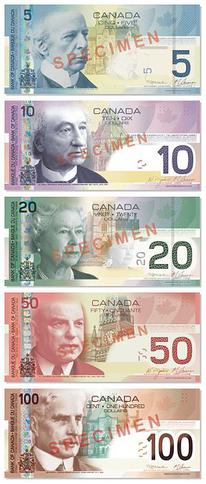 The background color has been solid white for decades, or very light khaki. Color background was only added to $20 bill in 2003. If you take a new $10, $20 or $50 and inspect the background closely, you will find that it is not solid color, but fine lines. This is a hard thing to replicate, as most printing machines are only capable of printing small dots of different color, in a manner similar to a computer screen. Just look closely at a photo in a magazine. I welcome this change. But at the same time I am disappointed. This technology was available in the early 20th century, at the latest.
Not only the background must be printed with thin lines, the paper itself must be made with color. Color should be added as early as the stage when the material is in liquid state, a different color for each denomination. If counterfeiters overcome the difficulty of printing, they can get $1 bills, bleach them, and print $100 on them. Fully utilizing color prevents them from doing so.
It is unfortunate that only background colors are added to the new "color" bills. Foreground objects on the back side are still green; and foreground objects on the front size are still black. Changing the foreground color so that it is different for each denomination helps the visually impaired.
Sizes
If the bills increase in size with their values, it helps the completely blind, and gives an extra clue to machine readers. It also helps preventing the "bleaching" counterfeit described above.
Hologram
 Banknote security features are something the more the merrier. Hologram is simply a nice thing to have. All denominations of the euro, the pound sterling, the Bulgarian lev, and the Canadian dollar have holograms.
Symbolism
Some people are reluctant to see the current setup changed because they fear that the long-lasting symbols will disappear. I beg to differ. True symbols always live on, in one form or another. The French franc was once an important currency in Europe. It was the basis of the Latin Monetary Union. The 1 French franc coin has featured "the sower" since 1898, interrupted briefly in the 20th century. When inflation took its toll, and France had to introduce "new franc" as 100 old francs, the sower was still on the 1 franc coin. It's not just that, the design was identical, except metal composition and size. Even when the euro replaces the franc, the sower is still on French euro coins. If they don't want to see Washington and the Great Seal go, I totally understand that. This problem can simply be resolve by placing them on the $1 coin.
Inevitable
Humans are creatures of comfort. We all like to use the things we're familiar with. The lack of change in the American currency may be attributed to political and financial stability. But people's unwillingness to change for the better (like the metric system) is another big factor. Economic theory says that inflation is inevitable, and a small amount is healthy to the economy. If the change doesn't happen now, it will happen sooner or later. We must look forward, not back.
Implementation
Rounding
Rounding is easy, with computerized registers. Doing it manually is also trivial. Like the two Eurozone countries that uses 5 cent as the smallest cash unit, Finland and the Netherland, items can be priced to cent. If paid with non-cash methods, such as credit card or check, they are paid to the precise cent. Only when cash is used, prices are rounded to the nearest 5 cents. And rounding occurs after the total is taken.
Public awareness and distribution
It is easy. As long as they stop printing the $1 bill, people will be aware, and the $1 coin will be distributed. Failure of doing so only shows one thing: lack of will. To start, they can give change only in $1 coins in post offices and federal establishments that deal cash with the public. And the federal government can "ask" state governments to do the same, such as DMV's. They can hang posters in the post offices, a very cheap way to increase awareness. Plus, if they are truly determined to carry the plan out, news reporters will report.
Vending machine and parking meter
Many vending machines are already capable of accepting the $1 coin. In fact, companies that make these machines prefer eliminating the $1 bill, to save maintenance cost on bill validators. Parking meters in my city accept the $1 coin too!
Summary
- Eliminate the penny, make 5¢ the smallest unit for cash transactions, but just cash.
- Make use of 50¢, and replace 25¢ with 20¢.
- Replace $1 bills with $1 coins.
- Make use of $2 as bills or coins.
- More colors on bills.
- Variable sizes of bills.
Related Wikipedia articles
- Efforts to eliminate the penny in the United States
- Coin Coalition
- Save the Greenback
- Cent (United States coin)
- Dollar (United States coin)
- Susan B. Anthony dollar
- Sacagawea dollar
- Presidential $1 Coin Program
- United States two-dollar bill
Related external links
- Should the penny go?, CNN Money, Apr. 11, 2002
- Do You Want That In Paper, or Metal?, Wall Street Journal, Nov. 6, 1997
- Financial Impact of Issuing the New $1 Coin, U.S. General Accounting Office, Apr. 7, 2000
- Measuring worth
- Historical prices of nickel
- Historical prices of copper
- Historical prices of zinc
- Historical prices of aluminum
This post is also linked from
What material for debased nickels?
Where have all our pennies gone?
What is happeneing to our pennies?
Thegm @ StumbleUpon
Sunday, March 04, 2001
Chinese
You know You're Chinese if...
- You unwrap Christmas gifts very carefully, so you can save and reuse the wrapping (and especially those bows) next year.
- You only buy Christmas cards after Christmas, when they are 50% off.
- When there is a sale on toilet paper, you buy 100 rolls and store them in your closet or in the bedroom of an adult child who has moved out.
- You have a vinyl table cloth on your kitchen table.
- Your stove is covered with aluminum foil.
- Your kitchen has a sticky film of grease over it.
- You have stuff in the freezer since the beginning of time.
- You use the dishwasher as a dish rack.
- You have never used your dishwasher.
- You keep a Thermos of hot water available at all times.
- You boil water and put it in the refrigerator.
- You eat all meals in the kitchen.
- You save grocery bags, tin foil, and tin containers.
- You use grocery bags to hold garbage.
- You always leave your shoes at the door.
- You have a piano in your living room.
- Your parents know how to launch nasal projectiles.
- You iron your own shirts.
- You play a musical instrument.
- You pick your teeth at the dinner table (but you cover your mouth).
- You twirl your pen around your fingers.
- Even if you're totally full, if someone says they're going to throw away the leftovers on the table, you'll finish them.
- You don't own any real Tupperware -- only a cupboard full of used but carefully rinsed margarine tubs, takeout containers, and jam jars.
- You also use the jam jars as drinking glasses.
- You've eaten a red bean Popsicle.
- You bring oranges (or other produce) with you as a gift when you visit people's homes.
- You have a collection of miniature shampoo bottles that you take every time you stay in a hotel.
- The condiments in your fridge are either Price Club sized or come in plastic packets, which you save/steal every time you get take out or go to McDonald's.
- Ditto paper napkins.
- You never order room service.
- You carry a stash of your own food whenever you travel (and travel means any car ride longer than 15 minutes). These travel snacks are always dried. As in not just dried plums, dried ginger, and beef/pork jerky, but dried cuttlefish (SQUID).
- You own a rice cooker.
- You wash your rice at least 2-3 times before cooking it.
- You spit bones and other food scraps on the table (That's why you need the vinyl tablecloth).
- Your parents vehemently refuse the sack of gold coin oranges that their guests just brought just to be courteous.
- You fight over who pays the dinner bill.
- Your dad thinks he can fix everything himself.
- You majored in something practical like engineering, medicine or law.
- When you go to a dance party, there are a wall of guys surrounding the dance floor trying to look cool.
- You live with your parents and you are 30 years old (and they prefer it that way). Or if you're married and 30 years old, you live in the apartment next door to your parents, or at least in the same neighborhood.
- You don't use measuring cups.
- You feel like you've gotten a good deal if you didn't pay tax.
- You beat eggs with chopsticks.
- Your parents' house is always cold.
- You have a teacup with a cover on it.
- You reuse teabags.
- You have a drawer full of old pens, most of which don't write anymore.
- if you're under age 20, you own a really expensive walkman if you're over 20, you own a really expensive camera.
- Your mom drives her Mercedes to the Price Club.
- You always look phone numbers up in the phone book, since calling Information costs 50 cents.
- You tip Chinese delivery guys/waiters more.
- You're a wok user.
- You only make long distance calls after 11pm.
- You know all the waiters at your favorite Chinese restaurants.
- You like Chinese films in their original undubbed versions.
- You have acquired a taste for bittermelon.
- You like congee with thousand year old eggs.
- You prefer your shrimp with the heads and legs still attached -- it means they're fresh.
- You never call your parents just to say hi.
- You always cook too much.
- if you don't live at home, when your parents call, they ask if you've eaten rice, even if it's midnight.
- Also, if you don't live at home, your parents always want you to come home.
- Your parents tell you to boil herbs and stay inside when you get sick.
- When you're sick, they also tell you not to eat fried foods or baked goods because they produce hot air (yeet hay in Cantonese).
- You e-mail your Chinese friends at work, even though you only sit 10 feet apart.
- Your parents never go to the movies.
- Your parents send money to their relatives in China.
- You use a face cloth.
- Your parents use a clothes line.
- You're always late.
- You eat every last grain of rice in your bowl, but don't eat the last piece of food on the table.
- You starve yourself before going to all you can eat sushi.
- You've joined a CD club at least once.
- You know someone who can get you a good deal on jewelry or electronics.
- You never discuss your love life with your parents.
- Your parents are never happy with your grades.
- You save your old Coke bottle glasses even though you're never going to use them again.
- You keep used batteries.
- You own your own meat cleaver and sharpen it.
- You keep most of your money in a savings account.
- You know what MJ means.
- You've been on the Love Boat or know someone who has.
- Your toothpaste tubes are all squeezed paper-thin.
- You love Chinese Martial Arts films.
- You have Tupperware in your fridge with three bites of rice or one leftover chicken wing.
- Shao Lin and Wu Tang actually mean something to you.
- You love to go to $1.75 movies.
- You love to go to $1.50 movies even more.
- You never order sweet-n-sour pork, egg foo young, or chop suey at a Chinese restaurant.
- You have a pager even though you don't really need one.
- You have a really nice pager with an alphanumeric display.
- You have a cell phone even though you don't really need one.
- You hate to spend more than $5 for lunch.
- Someone in your family drives a Honda.
- There are custom rims on the Honda.
- You have a Chinese knick-knack hanging from your rear-view mirror.
- You like to eat chicken feet.
- You suck on fish heads and fish fins.
- You turn bright red after drinking two tablespoons of beer.
- You can get a buzz on Coors O'Douls or Miller Sharps.
- You look like you are eighteen.
- You always look up at white women if you are male.
- You always look up at Chinese men if you are female.
- You own a gun if you are male.
- You only buy used cars.
- You have more than five remotes in your house.
- You like to sing Karaoke.
- You have a custom stereo in the Honda with the custom rims.
- Your entire house is covered with tile.
- You have those plastic walkways covering your hallway and other heavy foot traffic areas.
- You have plastic or some other kind of cover on your furniture.
- You leave the plastic on the lampshade for ten years or more.
- You eat family dinners with the TV on.
- You watched Connie Chung.
- You have a frightening amount of clutter in your house.
- You can't bear to throw things away.
- Your dad washes his hair four times a day, or never at all.
- You really hate getting B's on your report card.
- Your house smells like preserved fish.
- Or your house smells like Chinese medicine.
- You have 12-20 uncles and aunts.
- You've never kissed your mom or dad.
- You've never hugged them either, unless at family parties.
- Your unassisted vision is worse than 20/500.
- You wear contacts to avoid wearing those "coke-bottle" glasses.
- You've worn glasses at least since the fifth grade.
- You go to yard sales often.
- You've had a bowl cut before.
- if you lose a dollar, you dwell on it for more than five minutes.
- Your parents (or some other close relative) own a grocery store or restaurant.
- You love to "buck" the system.
- if you're overcharged you scream bloody murder, but if you're undercharged you go your merry way.
- Your hair sticks up when you wake up.
- You get a rush from making a good deal.
- You make ridiculous offers when bargaining (I'll give you $5 for that Integra).
- You'll haggle something that is non-negotiable.
- You love to use coupons.
- You drive around looking for the cheapest gas.
- You add twice the amount of water recommended when making orange juice from concentrate.
- You'll drive around for hours looking for the best parking spot.
- You take showers at night.
- You'll learn about sex from someone other than your parents.
- You'll be convinced your parents only had intercourse as many times required to produce you and your siblings.
- You've never seen your parents kiss.
- You've never seen your parents hug.
- Your grandmother lives with you and your family.
- The Honda has been lowered.
- You never buy stuff from the concession stand at movies.
- You tip less than 15%.
- You never order desserts at restaurants.
- You always have water when dining out.
- You refuse to use the valet.
- You try not to use the bellhop for fear of tipping.
- You avoid the non-free snacks in hotel rooms.
- You don't mind squeezing 20+ people into one motel room.
- You want your dollar back from the friend that borrowed it right away.
- You get the runs when you drink too much milk.
- Most girls have more body hair than you if you're male.
- You have an unexplainable love for cameras.
- Sanrio means a lot to you.
- Your refrigerator stinks.
- Your parents don't want you to move out when you turn 18.
- Your parents want to live with you when they are old.
- You tap the table when someone pours tea for you (not applicable for jook sing).
- You point to your nose when referring to yourself.
- You say "aiya!" and "wah!" frequently.
- You lie about your kids ages to get a discount.
- You lie about your age to get a senior citizen discount.
- You don't want to wear your seatbelt because it's uncomfortable.
- You love Las Vegas, slot machines, and blackjack.
- You love to play mah jong.
- You want to marry Chinese, or at the very least white.
- You have to read all your parents' mail written in English.
- You have to make phone calls for your parents to English speakers.
- Your parents ask you if you are home when you come home (faan nei lah").
- You are constantly being set up with uninteresting (and usually ugly) people by your parents.
- You always hear how great so-and-so's son or daughter is doing. Then your parents ask you why you are such shit and why you are always embarrassing the family.
- Your parents wish you gave them 30% of your income.
- Your childhood is filled with painful memories of the ong feather duster (guy mo so).
- You can use words like "chink" and "chinaman" with impunity.
- Your clothes smell like fried rice.
- You talk at the top of your voice a lot.
- You hate eating cheese.
- You go to a lot of Chinese wedding banquets.
- At these banquets, for some unexplainable reason all the older Chinese people will start hitting their water glasses with chopsticks until the newlyweds kiss.
- All the older Chinese people will have to be addressed with some title like "great grand aunt" or something. Then when you address them and bungle up your inferior "ABC" Chinese, your mom fakes laughter and makes some comment about American Born Chinese.
- Your mother worries constantly that other Chinese will consider her a bad mother if her children re "bad."
- You have a big aquarium filled with colorful fish somewhere in your house.
- Your mother is strangely obsessed with plants.
- Your mother answers the phone, its one of your friends, she asks them personal questions.
- Your mother likes to try to smooth/tuck in your clothes in a public place.
- if you are a guy, you either have brown/blonde bangs with black hair parted down the middle, or if you're middle-aged (like most fathers) you have a "comb-over."
- White people look at you strangely if you tell them you are Buddhist.
- Even though you have a lot of white friends, you harbor a deep resentment towards them.
- #194 except to include people of all races.
- You either hate black people or think and speak like you were black.
- You believe that "length doesn't matter."
- yOu tYpE LiKe dIs tO LoOk kEwL.
- if you are a girl, you don't mind hanging out with ~10 guys by yourself.
Subscribe to:
Posts (Atom)