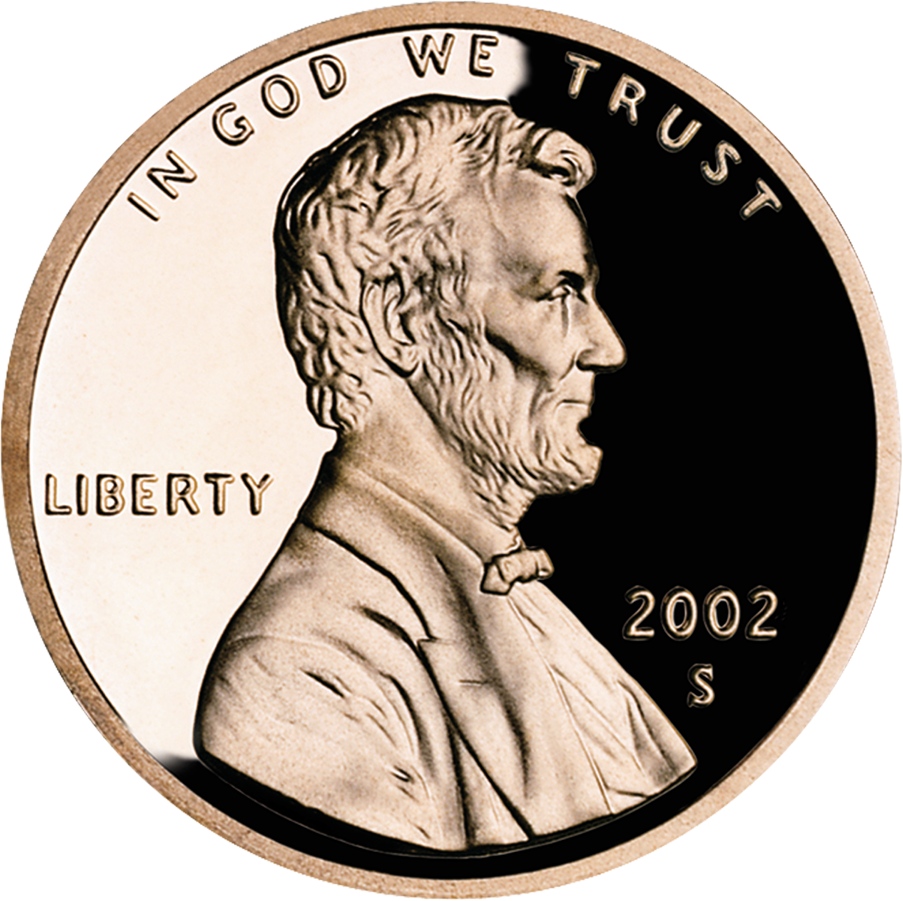
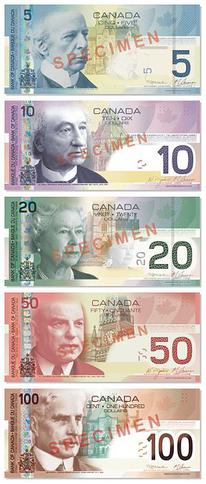
Currently the commonly used denominations of the
United States dollar are
1¢,
5¢,
10¢,
25¢,
$1,
$5,
$10, and
$20. Other currencies may have other kinds of arrangement. One must wonder if there is a better lineup than this seemly arbitrary one. In this post, I present you my sincere suggestions as a 6.5 year long currency collector.
Eliminate the penny

What is the optimal smallest unit of cash transaction or accounting? Economic theory dictates that the smaller the smallest unit, the more it stimulates competition, which is a good thing. But this unit cannot go indefinitely small, as there are also cost associated with handling and counting these petty units. Such cost includes labor counting, wrapping, and distributing. There are good arguments and counterarguments at this Wikipedia article -
Efforts to eliminate the penny in the United States, which I will summarize here
- cost of production
It costs more than the face value now. Prices of all metal have been increasing at an alarming pace in the past 5 years. See here.
- Distribution costs
It costs 3¢ per penny.
- Lost productivity and opportunity cost of use
With the average wage, it takes 2 seconds to earn 1¢.
- Limited utility
Many vending machines and bus fare machines do not accept pennies.
Some people are worried about the additional inflation this action may bring. However, if the merchants do not change prices during the switchover, the statistical experiments show that the impact is extremely low to customers. Wikipedia quotes study which concludes a 1/40 cent per transaction gain to the customers. Another
similar study conducted for Canada shows that with 1 item the rounding produces less than 0.06 cent of impact per transaction in average, and even less with more items.
But ultimately, it comes down to the cost/benefit analysis, the benefit being the above mentioned better competition. As a common person, without the resources and manpower of the government, think tanks, or consulting firms, I can only resort to a comparative study and a historical study – look at what other people do, and what the Americans did. I will talk about the methodology and the result later on the next section.
Replace $1 bill with $1 coin

In modern societies, lower denominations are coins, higher denominations are banknotes. Why? A coin lasts for decades, while the life of a bill depends on its value. The lower the value, the faster it circulates, and the shorter the lifetime. The manufacturing cost of a coin is much higher than that of a bill. But in the long run, the cost of
using a coin may be cheaper if the lifetime of the bill is less than a certain threshold. For this reason, there exists a mathematical optimal cut-off point between coins and bills. Is it now the time to replace $1 bill with $1 coin? In 2000, Bernard Unger of the Government Accounting Office
reported to Congress that switching from a dollar bill to a dollar coin would save the federal government $522 million a year. In this post, I will resort to comparative study again.
Comparative study
25 "richest" countries/regions are selected. But there are two primary methods of calculating income: nominal
GDP and GDP at
purchasing power parity. The nominal value is just the sum of economic output as-is, and then converted by exchange rate. PPP adjusts price differences from one economy to another. In other words, it measures output relative to an imaginary index good. 25 richest from both lists are combined to make 27 countries/regions. The source is the
IMF (
nominal and
PPP). Wikipedia has copies which are sorted (
nominal and
PPP). The smallest coin, the larges banknote, and the smallest banknote in each country/region are listed and converted into various meaningful values for comparison.
Mainland China is also included in the list just for my own curiosity. However, only the original 27 countries/regions are used for ranking and average.
In this table, we will find that the smallest coin, the largest coin, and the smallest banknote in Norway are 50 øre (0.5 krone), 20 kroner, and 50 korner respectively. By a straight conversion to the U.S. currency, they are worth 8.13¢ (!), $3.25, and $8.13. By this comparison, penny being the lowest denomination in the U.S. ranks 24th among the 27; quarter being the largest denomination in the U.S. ranks 26th, and $1 ranks the 25th. This is simply not in sync with the economic status of the U.S.. It ranks the 3rd if using PPP and 8th if using nominal.
From now on, these three values will be written as a
tuple, like (1¢, 25¢, $1).
If changing the value of the U.S. to (5¢, $1, $2), then the U.S. would rank (7th, 23rd, 22nd). There are still room to "improve" on the largest coin and the smallest bill. (5¢, $2, $5) means (7th, 16th, 17th). Remember, this comparative study is based on the assumption that most people are sane and do the right thing.
However, prices are different in each country/region. Prices in Norway are 49% higher than in the U.S.! so 50 øre in Norway cannot buy as much as 8.13¢ in the U.S., but only 5.44¢. This is where the ratio between nominal and PPP comes in. The current value (1¢, 25¢, $1) ranks (24th, 25th, 25th). Jumping to (5¢, $2, $5) means (8th, 17th, 18th).
The same process can be repeated for relative value to GDP per capita. I used the nominal value because it is the value measured in their respective currencies and prices. The result is similar.
Enough with the numbers, what does this mean? The U.S. dollar is in a low position relative to its economic rank. That means these three numbers have room to grow upward. I have to admit that raising the smallest unit from 1¢ to 5¢ is a big step, both from an absolute and a relative perspective.
But the pressure of replacing the $1 bill with $1 coin is imminent. Heck, the results even show that it is about right to use a $2 coin. Canada issued
CA$1 in 1987,
CA$2 in 1996. Australia issued
AU$1 in 1984,
AU$2 in 1988. The U.K. issued
£1 in 1983,
£2 in 1997. It is already late to replace the $1 bill.
Historical study
measuringworth.com is a good website for querying relative value using various metrics.
GDP deflator usually gives the smallest ratio, while relative share of GDP gives the greatest. To make a convincing argument, I will use the GDP deflator to conservatively state the relative value in 2005 of some amount in the past. Let's see how much 25¢, 50¢, and $1 in the past would be worth in 2005.
| | 25¢ | 50¢ | $1 |
| 1900 | 5.133875 | 10.26775 | 20.5355 |
| 1950 | 1.705075 | 3.41015 | 6.8203 |
| 1960 | 1.3396 | 2.6792 | 5.3584 |
| 1970 | 1.0238 | 2.0476 | 4.0952 |
| 1980 | 0.52155 | 1.0431 | 2.0862 |
| 1990 | 0.34545 | 0.6909 | 1.3818 |
| 2000 | 0.28185 | 0.5637 | 1.1274 |
| 2005 | 0.25 | 0.5 | 1 |
So if people in 1900 didn't have problems spending what would be at least 20¢ in 2005 as the smallest unit, and people in 1950 didn't have problems spending what would be 6.8¢ in 2005 as the smallest unit, why should we have problems using nickels as the smallest unit? By the way, the
half cent coin was rendered obsolete some time in the 19th century.
By the same token (no pun intended), $1 coin is more than appropriate. The value of the quarter had been more than a 2005 dollar up until early the 1970s. They didn't have problems, why should we?
Take advantage of $2 bill or even coin
Eliminate the quarters and replace with 20¢ and 50¢

For every
$2 bill/coin produced, two $1 bills/coins are saved. For this reason, the more denominations, the more cost saved. So why not $3, $6, $7? I believe that if a denomination is less than twice of the next lower one, the setup would be suboptimal. I wish I could prove this mathematically, but I have yet to come up with a proof. And because we live in a decimal world, $0.1, $1, $10, $100 ..., are a must. If we combine these two requirements, it would only leave three lineups: 1-2-4-10, 1-2-5-10, 1-2.5-5-10. A number four is hardly seen from physical currencies, anywhere in the world, although it did exist. So the first one is out of the question. The U.S. dollar is a funny thing. Sub dollar denominations are 1-2.5-5-10, denominations higher than a dollar are 1-2-5-10. Which one is better? We can study this through "average usage". Assuming 100 different sub-dollar amounts, from 0 to 99¢, have equal probability to occur at each cash transaction. For example, there is 1/5 probability to use zero, 1, 2, 3, or 4 pennies. Therefore, the expected usage is 2. (1¢, 5¢, 10¢, 25¢) => (2, 0.4, 0.8, 1.5), an average of 4.7 coins used for each transaction. The table below illustrates expected usage for any given lineup, expected total number of coins used for a transaction, expected total weight of coins under different weight assumptions.
| | Denominations (¢) | # of coins | Weight Assumption (gram) |
| | 1 | 5 | 10 | 20 | 25 | 50 | 100 | 200 | Current | Hypo | Euro | My |
| 1-5-10-25 | 2 | 0.4 | 0.8 | | 1.5 | | | | 4.7 | 17.3194 | 17.3194 | 18.058 | |
| 1-5-10-25-50 | 2 | 0.4 | 0.8 | | 0.5 | 0.5 | | | 4.2 | 17.3194 | 15.1494 | 16.218 | |
| 1-5-10-20-50 | 2 | 0.5 | 0.4 | 0.8 | | 0.5 | | | 4.2 | 18.6132 | 16.4432 | 16.692 | |
| 5-10-20-50 | | 0.5 | 0.4 | 0.8 | | 0.5 | | | 2.2 | 13.6132 | 11.4432 | 12.092 | 10.004 |
| 5-10-20-50-1 | | 0.5 | 0.4 | 0.8 | | 0.5 | 0.4 | | 2.6 | 16.8532 | 14.6832 | 15.092 | 12.804 |
| 5-10-20-50-1-2 | | 0.5 | 0.4 | 0.8 | | 0.5 | 0.4 | 0.8 | 3.4 | 24.4532 | 22.2832 | 21.892 | 19.604 |
| Weight Assumption (gram) |
| Current | 2.5 | 5 | 2.268 | 5.67 | 5.67 | 11.34 | 8.1 | 9.5 | | | | | |
| Hypothetical | 2.5 | 5 | 2.268 | 5.67 | 5.67 | 7 | 8.1 | 9.5 | | | | | |
| Euro | 2.3 | 3.92 | 4.1 | 5.74 | 5.74 | 7.8 | 7.5 | 8.5 | | | | | |
| My | | 2.3 | 3.92 | 5.67 | | 5.5 | 7 | 8.5 | | | | | |
In this table, the "current" weight assumption is the weights of the American coins, including the
gigantic 50¢ coin. The weight of the quarter substitutes for an imaginary 20¢ coin. And I made up the 9.5-gram weight of an imaginary $2 coin. The "hypothetical" weight assumption changed the weight of the 50¢ coin to something more practical.
The current system results in 4.7 coins which weigh 17.3194 grams. If 50¢ coin is used, either 20¢ or 25¢ would result in 4.2 coins. So which one is better given this tie? 20¢ is better for two reasons:
- It is easier to make human mistake with quarters when change is a number like 38¢, 43¢, 84¢, 93¢.
- Inflation is inevitable. Eventually, 10¢ will become the smallest unit of account. That will leave 25¢ in an awkward position.
Therefore, I conclude that the 1-2-5-10 setup is the best setup.Following with the use of 20¢ and 50¢, eliminating the penny will reduce the expected number of coins to 2.2 with a weight of 13.61g! Even if $1 becomes a coin, the usage only increased to 2.6. The current size of the 50¢ coin is a legacy specification. If I change it to 7 gram, then the (5¢, 10¢, 20¢, 50¢, $1) setup would result in (2.6 coins, 14.68g), not a bad gain from the original (4.7 coins, 17.32g), eh?
A $2 coin will increase the expected number of coins and weight somewhat. If that is a concern, the use of a $2 coins can be deferred. However, $2 bill must be a substitute.
So if the advantage of a 50¢ is so obvious, why don't people use it?
This Wikipedia article has a thorough explanation.
What can we learn from the euro

The
euro was designed when there was no euro. They must have designed it to avoid all kinds of silly things learned from the history, because it would be much harder to correct once the physical currency is in circulation. Euro is a 1-2-5-10 setup from 1 cent to €500, which confirms my previous claim. There are 8
euro coin denominations. 1, 2, 5 euro cent form a group, which is copper in color, smooth on the edge. 10, 20, 50 euro cent coins from a second group, which is gold in color, scalloped on the edge. 2 and 20 euro cent coins also have lightly different edges, to distinguish themselves from peers of their respective groups. €1 and €2 are bimetal, with fancier edges.
The sizes of the euro coins generally increase with value, which is only intuitive, unlike the American coins. The 5 euro cent coin is slightly larger than the 10 euro cent coin, the 50 euro cent coin is slightly larger than the €1 coin. This is done to enlarge the size difference within each "group" I defined earlier. This combination of color, edge, and size is a perfect design for common users, visually impaired people, completely blind, and tourists.
If the American currency was to be completely redesigned, what can be done, assuming a 5¢, 10¢, 20¢, 50¢, $1, $2 lineup?
Make 5¢ smaller than 10¢
It is only a legacy that the current nickel is bigger than the dime. When the U.S. was on the gold/silver standard, the quarter and the dime had to be a certain size, in silver with certain purity. So the size of the dime was defined like that and still remains the same until this day. Nickel, not made of silver, was not constrained by this. So they probably decided not to make the nickel even smaller than the dime, which would be ridiculously small. Now in the 21st century, it is only natural to make 5¢, which would be the smaller coin in my design, smaller than 10¢.
Replace 5¢ and 10¢ with copper plated metal
Copper color coins represent lower values in most places in the world, including the U.S. itself. The interior metal should be some cheap metal, like zinc (
$1.64/lb) or aluminum (
$1.31/lb). The edge of the 5¢ coin shall be smooth (cheapest to make), and the edge of the 10¢ coin shall be smooth with a grove to distinguish from the 5¢.
20¢ and 50¢ gold in color
You might be wondering, why don't I choose silver color for mid tier coin, and gold color for high end coins because people usually think of gold being worth more than silver. Unfortunately, silver color coins are usually made of
cupronickel. 25% of nickel is typical. And nickel is the most expensive metal among the common ones to make coins. Nickel costs
$19.92/lb, while copper costs
$2.81/lb. Choices of gold color metal includes
aluminum bronze, which is typically 92% copper, 6% aluminum, and 2% nickel, or
Nordic gold, the composition of 10, 20, 50 euro cent that is 89% copper, 5% aluminum, 5% zinc, and 1% tin.
The edge shall be scalloped and
Spanish flower$1 and $2
They shall be made with a silver color metal, like
cupronickel, or
bimetal. One of the coins shall have intermittent scalloped and smooth edge; the other coin shall have inscription on the edge.
Arabic numerals
Come on! It is absurd not to have any Arabic numeral on coins. By the way, do you know that the
presidential $1 coin is the first coin to have Arabic numeral in modern time?
More security features on banknotes
The designs of the Federal Reserve notes have not changed much since 1928. It was until the late 1990s and early 2000s when they upgraded $5 and above to "large portrait", and then added colors. If all other countries were doing things much earlier than the U.S. did, then there has to be something wrong with the USD. It's not rocket science!
Color

The background color has been solid white for decades, or very light khaki. Color background was only added to $20 bill in 2003. If you take a new $10, $20 or $50 and inspect the background closely, you will find that it is not solid color, but fine lines. This is a hard thing to replicate, as most printing machines are only capable of printing small dots of different color, in a manner similar to a computer screen. Just look closely at a photo in a magazine. I welcome this change. But at the same time I am disappointed. This technology was available in the early 20th century, at the latest.
Not only the background must be printed with thin lines, the paper itself must be made with color. Color should be added as early as the stage when the material is in liquid state, a different color for each denomination. If counterfeiters overcome the difficulty of printing, they can get $1 bills, bleach them, and print $100 on them. Fully utilizing color prevents them from doing so.
It is unfortunate that only background colors are added to the new "color" bills. Foreground objects on the back side are still green; and foreground objects on the front size are still black. Changing the foreground color so that it is different for each denomination helps the visually impaired.
Sizes
If the bills increase in size with their values, it helps the completely blind, and gives an extra clue to machine readers. It also helps preventing the "bleaching" counterfeit described above.
Hologram

Banknote security features are something the more the merrier.
Hologram is simply a nice thing to have. All denominations of the euro, the pound sterling, the Bulgarian lev, and the Canadian dollar have holograms.
Symbolism
Some people are reluctant to see the current setup changed because they fear that the long-lasting symbols will disappear. I beg to differ. True symbols always live on, in one form or another. The
French franc was once an important currency in Europe. It was the basis of the
Latin Monetary Union. The 1 French franc coin has featured "the sower" since 1898, interrupted briefly in the 20th century. When inflation took its toll, and France had to introduce "new franc" as 100 old francs, the sower was still on the 1 franc coin. It's not just that, the design was identical, except metal composition and size. Even when the euro replaces the franc, the sower is still on
French euro coins. If they don't want to see Washington and the
Great Seal go, I totally understand that. This problem can simply be resolve by placing them on the $1 coin.
Inevitable
Humans are creatures of comfort. We all like to use the things we're familiar with. The lack of change in the American currency may be attributed to political and financial stability. But people's unwillingness to change for the better (like the metric system) is another big factor. Economic theory says that inflation is inevitable, and a small amount is healthy to the economy. If the change doesn't happen now, it will happen sooner or later. We must look forward, not back.
Implementation
Rounding
Rounding is easy, with computerized registers. Doing it manually is also trivial. Like the two Eurozone countries that uses 5 cent as the smallest cash unit, Finland and the Netherland, items can be priced to cent. If paid with non-cash methods, such as credit card or check, they are paid to the precise cent. Only when cash is used, prices are rounded to the nearest 5 cents. And rounding occurs after the total is taken.
Public awareness and distribution
It is easy. As long as they stop printing the $1 bill, people will be aware, and the $1 coin will be distributed. Failure of doing so only shows one thing: lack of will. To start, they can give change only in $1 coins in
post offices and federal establishments that deal cash with the public. And the federal government can "ask" state governments to do the same, such as
DMV's. They can hang posters in the post offices, a very cheap way to increase awareness. Plus, if they are truly determined to carry the plan out, news reporters will report.
Vending machine and parking meter
Many
vending machines are already capable of accepting the $1 coin. In fact, companies that make these machines prefer eliminating the $1 bill, to save maintenance cost on bill validators.
Parking meters in my city accept the $1 coin too!
Summary
- Eliminate the penny, make 5¢ the smallest unit for cash transactions, but just cash.
- Make use of 50¢, and replace 25¢ with 20¢.
- Replace $1 bills with $1 coins.
- Make use of $2 as bills or coins.
- More colors on bills.
- Variable sizes of bills.
Related Wikipedia articles
Related external links
- Should the penny go?, CNN Money, Apr. 11, 2002
- Do You Want That In Paper, or Metal?, Wall Street Journal, Nov. 6, 1997
- Financial Impact of Issuing the New $1 Coin, U.S. General Accounting Office, Apr. 7, 2000
- Measuring worth
- Historical prices of nickel
- Historical prices of copper
- Historical prices of zinc
- Historical prices of aluminum
This post is also linked from
What material for debased nickels?Where have all our pennies gone?What is happeneing to our pennies?Thegm @ StumbleUpon
 Search statistics through Google and watch it move with Gapminder. Google Subscribed Links makes it possible to search deep into Gapminder's moving graphs visualizing world development. Spring 2006.
 A presentation for UNDP Human Development Report 2005 in English and some other languages. Human Development Trends was produced in 2005. Available in English, Danish, Finnish, French, German, Hungarian, Lithuanian, Norwegian, Russian, Spanish & Swedish.